
Not every smile needs a makeover. Sometimes it’s one chipped edge, a tooth that’s a little shorter than its neighbor, or a small gap that catches your eye in every photo. For minor imperfections like these, cosmetic bonding is often the most conservative way to get the smile you want, usually in a single visit and with little or no drilling.
Here’s what bonding is, what it can (and can’t) do, and how to know if it’s right for you.
What is cosmetic bonding?
Cosmetic bonding (also called dental bonding or composite bonding) uses a tooth-colored composite resin that’s shaded to match your natural enamel. The resin is applied directly to the tooth, sculpted by hand into the ideal shape, hardened with a curing light, and then polished to a natural shine.
Because the material is added to the tooth rather than replacing it, bonding typically preserves nearly all of your natural tooth structure. In most cases no anesthetic is needed.
A real result from our office
The before-and-after below is from a patient treated by Dr. Selay Karbasi here at Dentistry at Grayhawk. The front teeth had chipped, uneven biting edges that made the smile look worn and asymmetrical. With cosmetic bonding, Dr. Karbasi rebuilt and reshaped those edges so the front teeth line up evenly, without crowns or veneers.
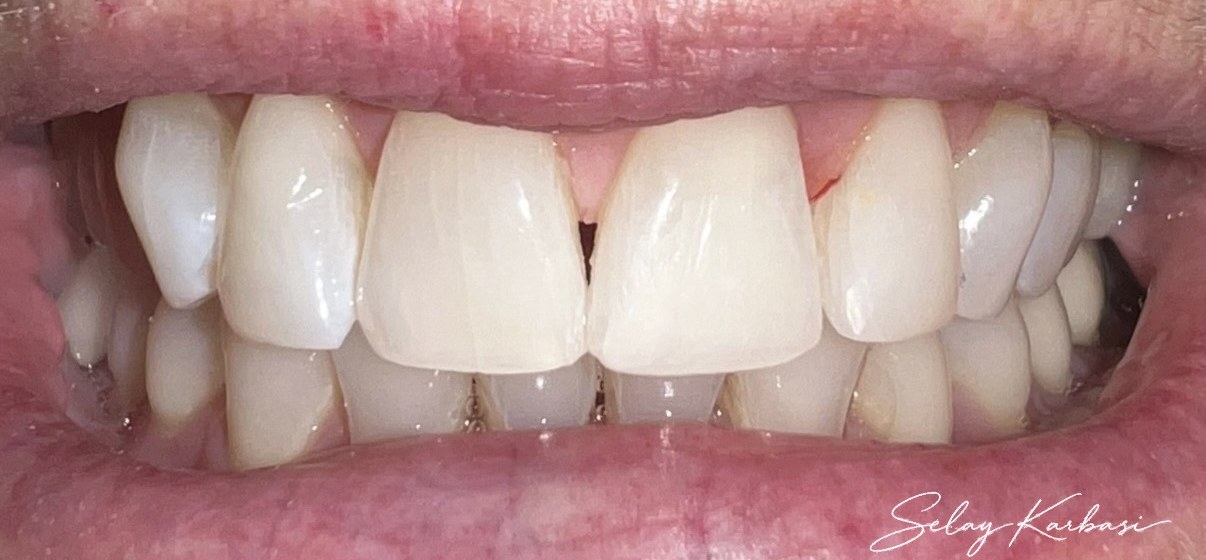
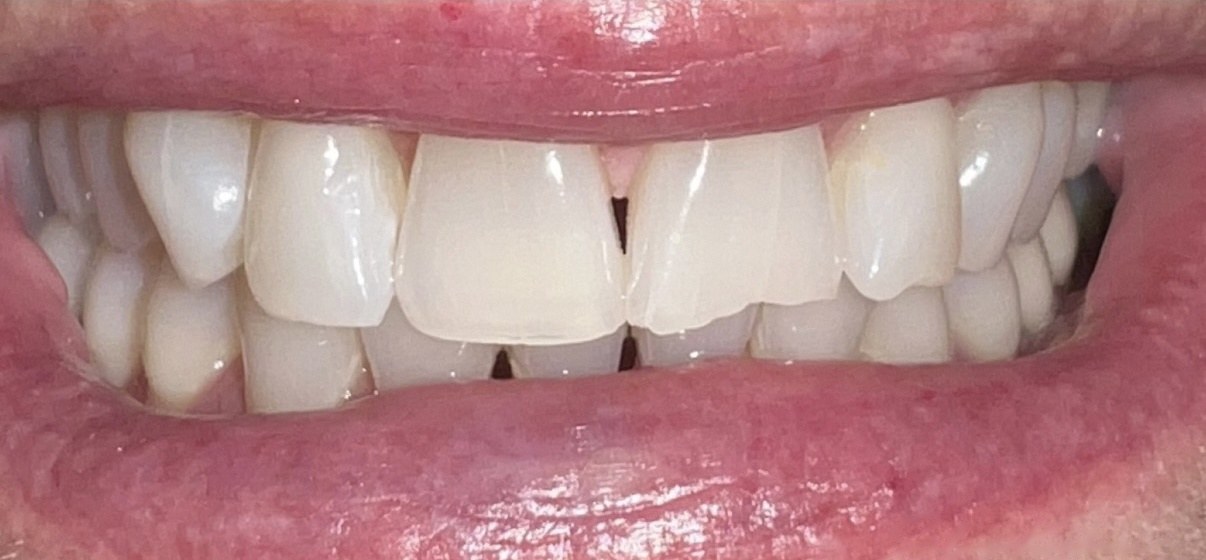 Before
After
Drag the slider to compare before and after. See more results in our smile gallery.
Notice what didn’t change: the patient’s natural teeth are still their own. That is the heart of conservative dentistry.
What can bonding fix?
- Chipped or cracked edges from biting, sports, or everyday wear
- Uneven tooth lengths that make the smile line look crooked
- Small gaps between teeth
- Minor shape issues, such as a tooth that’s slightly narrow or pointed
- Isolated discoloration or spots that whitening won’t remove
Bonding vs. veneers: which is right for you?
Both bonding and veneers can transform a smile. The best choice depends on how much you want to change.
- Bonding is ideal for small, targeted fixes on one or a few teeth. It’s usually completed in one visit, costs considerably less, and requires little to no change to your natural tooth.
- Porcelain veneers are better when you want a bigger change in shape, color, or alignment across several teeth. Porcelain resists staining better and generally lasts longer than composite.
Many patients start with bonding for a small concern and are thrilled with the result. Others find veneers are the better long-term investment. During your consultation, Dr. Karbasi will walk you through both options honestly. If you’re weighing veneers, our post on no-prep vs. traditional veneers is a good place to start.
What to expect at your visit
- Consultation and shade matching. We talk through your goals and select a resin shade that blends with your natural teeth.
- Gentle preparation. The tooth surface is lightly roughened so the resin bonds securely, usually without numbing.
- Sculpting. The composite is applied in layers and shaped by hand. This is where artistry matters most.
- Curing and polishing. A special light hardens each layer, and the final polish gives the tooth a natural, light-reflecting finish.
Most bonding appointments take about 30 to 60 minutes per tooth, and you can return to your normal routine right away.
How long does bonding last?
With good care, cosmetic bonding commonly lasts several years before it needs a touch-up or replacement. To keep it looking its best:
- Avoid biting fingernails, pens, ice, or other hard objects
- Limit coffee, tea, red wine, and tobacco, which can stain composite over time
- Wear a night guard if you grind or clench your teeth
- Keep up with regular cleanings so we can polish and check your bonding
One tip: if you’re planning to whiten your teeth, do it before bonding. Composite doesn’t change color with whitening, so we’ll match the resin to your brighter shade.
Frequently asked questions
Does cosmetic bonding hurt?
Most patients feel little to no discomfort. Because bonding rarely involves removing tooth structure, anesthetic is usually not needed.
Is bonding permanent?
Bonding is long-lasting but not permanent. It may need to be polished, repaired, or redone after several years, which is quick and simple to do.
Will bonding look natural?
Yes. When it’s shade-matched and sculpted carefully, bonding blends in with the surrounding teeth. As you can see in the photo above, the goal is a smile that looks like your own, only better.
Is bonding covered by insurance?
When bonding is done purely for cosmetic reasons, insurance usually doesn’t cover it. When it repairs a chipped or damaged tooth, some plans may help. Our team is happy to check your benefits before treatment.
Perfect your smile in North Scottsdale
If a small chip, gap, or uneven edge has been bothering you, cosmetic bonding may be the simple fix you’ve been looking for. Dr. Selay Karbasi and the team at Dentistry at Grayhawk provide cosmetic and family dentistry at 20801 N. Scottsdale Road, Suite 209, serving Grayhawk, North Scottsdale, and the surrounding communities.
Bothered by a chip or uneven edge?
Book a cosmetic consultation with Dr. Selay Karbasi at our North Scottsdale office on Scottsdale Road. We’ll show you whether bonding, veneers, or another conservative option is the best fit for your smile.
Request a consultation or call (480) 513-2773